Home›Competitions›India Test cricket
Sunil Gavaskar compares Ajinkya Rahane to Rahul Dravid in retirement tribute
Gavaskar says Rahane's record as India captain deserved greater recognition, with the 2020-21 Border-Gavaskar Trophy comeback at the centre of his assessment.
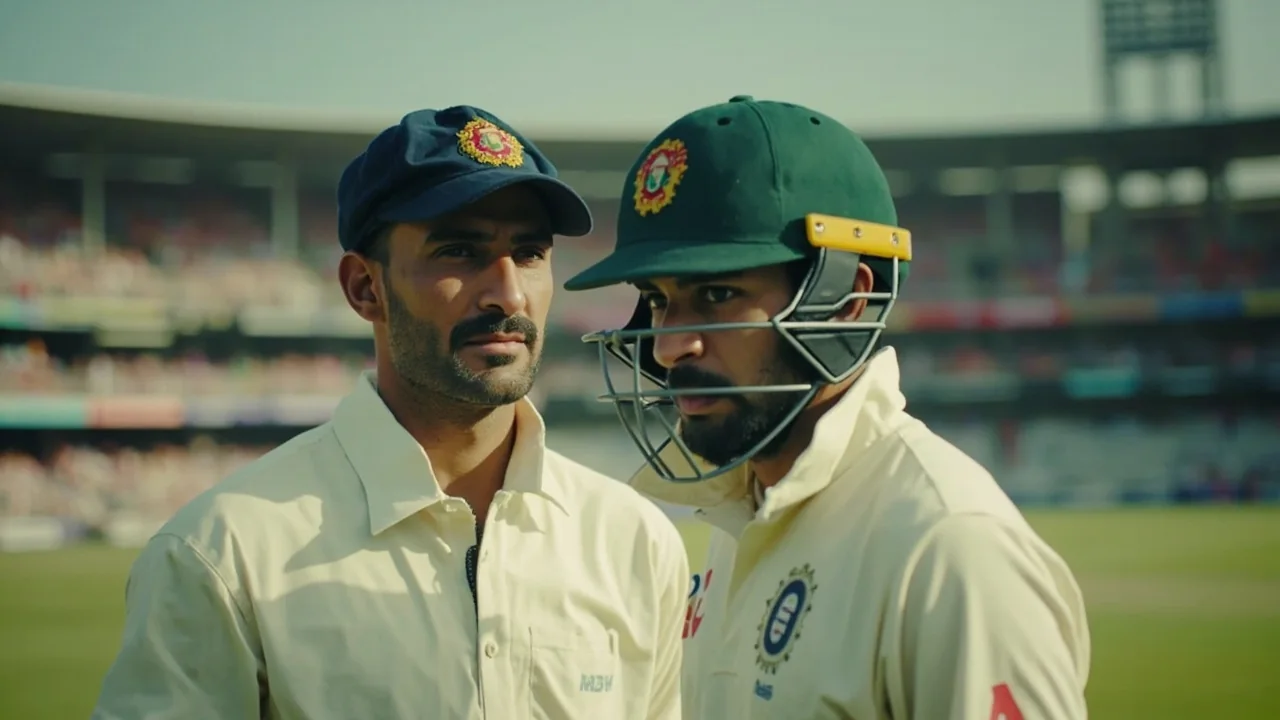
Sunil Gavaskar has placed Ajinkya Rahane alongside Rahul Dravid in a tribute to two India captains whose leadership, in his view, received less recognition than it deserved. Writing after Rahane announced his retirement from all forms of cricket, Gavaskar focused on a record of four wins from six Tests as captain, with no defeats, and on the series comeback Rahane led in Australia in 2020-21.
The comparison was not about equating their batting records or claiming that their careers followed the same path. Gavaskar's point was narrower: both men carried substantial responsibility for India while public attention often settled elsewhere. He wrote that Rahane “never got the credit he deserved” as captain and said his leadership “hardly got the applause that it merited”.
Rahane's retirement gives that judgment a clear moment of reflection. His career included long stretches as a senior middle-order batter, but the six Tests in which he led India now form a compact record of their own. Gavaskar's tribute asks that the record be judged not only by its numbers, but by the conditions in which its most important victories were achieved.
A tribute built around leadership
Gavaskar's argument begins with the captaincy tally: four wins in six matches and no losses. Small samples need context, especially in Test cricket, where venues, opposition and squad strength can radically change the burden on a captain. The defining portion of Rahane's sample came in Australia, against a side defending home conditions and after India had suffered one of the sharpest collapses in their history.
That setting matters because Rahane did not inherit a stable campaign. India had been bowled out for 36 in the Adelaide opener. Virat Kohli then returned home for the birth of his first child, while injuries progressively removed several first-choice players from the tour. Rahane was therefore asked to repair morale, settle a changing side and produce a competitive response without the personnel that had begun the series.
Gavaskar also used the comparison with Dravid to describe a recurring problem in how captaincy is judged. Victories are often broken into the individual deeds of batters and bowlers, while defeats are attached to the captain and coach. In that pattern, a leader can make sound decisions through a successful series yet still see the acclaim directed almost entirely toward the performers who appear in the scorecard.
Melbourne changed the tone of the tour
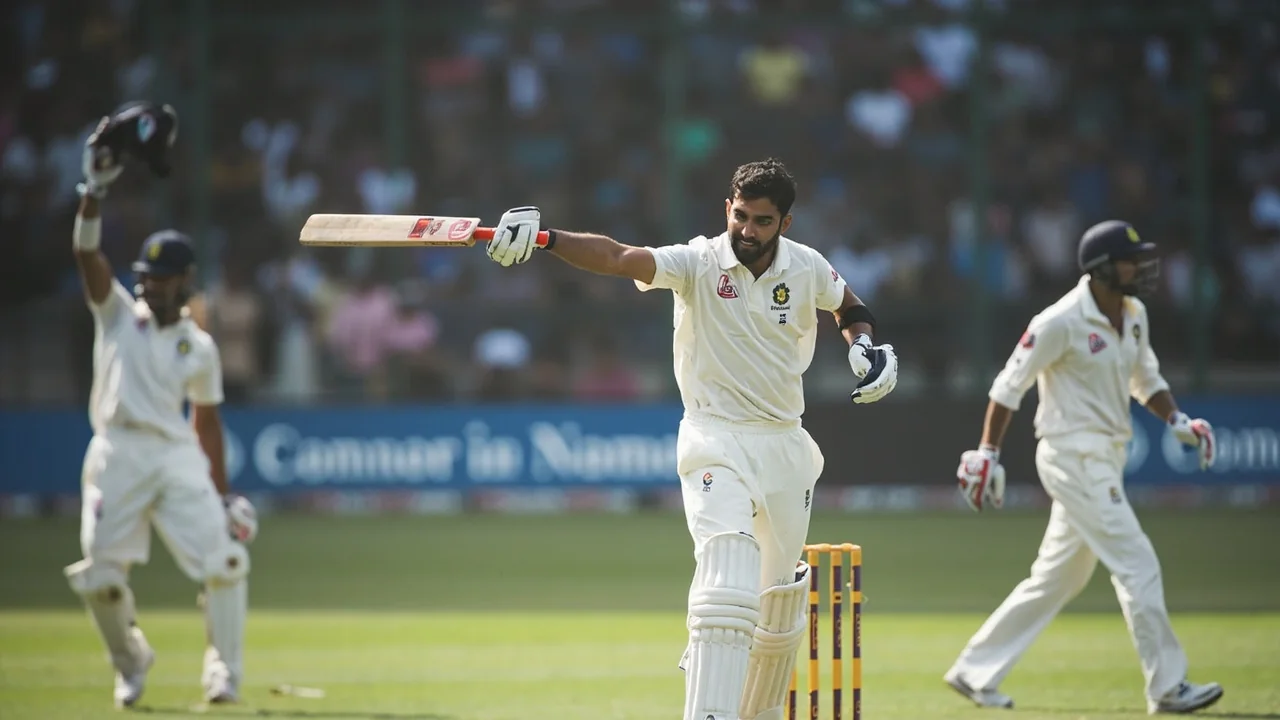
The second Test in Melbourne supplied both a result and a visible statement from the new captain. Rahane scored a century that Gavaskar recalled as match-winning. The innings gave India a platform after Adelaide, but its importance extended beyond accumulation. A captain leading a wounded batting group had produced the decisive contribution himself.
That response prevented the opening defeat from defining the entire tour. India moved from the humiliation of 36 all out to a victory under a stand-in captain, and the series became competitive again. Rahane's calm public manner made the change look less dramatic than it was. The team had to absorb the absence of Kohli, reorganise roles and maintain belief while the injury list continued to grow.
Melbourne also explains why Gavaskar's praise is aimed at recognition rather than mythology. Rahane's contribution can be described without exaggeration: he took over after a collapse, scored the central innings in the next Test and led India back into the series. Those are direct facts, and they support the view that his leadership deserves to be treated as more than a temporary substitution.
An unbeaten captaincy record with difficult assignments
Four victories and two draws from six Tests give Rahane an unbeaten record as India captain. The figure does not establish how he would have fared over a multi-year tenure, and Gavaskar did not need it to do so. Its value lies in what Rahane delivered when he was asked to lead: stability, wins and no defeat across the opportunities he received.
Captaincy records can flatten the difference between an orderly home match and a disrupted overseas campaign. Rahane's Australian assignment belongs firmly in the second category. The squad that reached the deciding Test was short of several established players, making selection and role clarity part of the captain's work before tactics even entered the discussion.
For readers following India's Test history and its major series, the wider competition record gives the setting for why the Border-Gavaskar Trophy comeback remains so prominent. A 2-1 win in Australia after losing the opener would have been notable with a full side. Completing it while injuries changed the team repeatedly made Rahane's stewardship more demanding.
The Gabba supplied the lasting result
India's win at The Gabba completed the reversal. The venue had long represented one of the hardest assignments for visiting teams, and India entered the decider with an injury-ravaged squad. Rahane's team won the Test and the series 2-1, turning a tour that began with 36 all out into one of India's strongest overseas results.
Gavaskar described the Gabba win as unprecedented. Within his tribute, it is the final evidence for the captaincy case: Rahane did not merely supervise a recovery in Melbourne, he led the side through the remaining uncertainty and finished the job in the deciding Test. The series was built from many individual contributions, but choosing, backing and organising that changing group belonged to the captaincy story.
The result also illustrates Gavaskar's criticism of the usual distribution of praise. Every successful chase, partnership and spell deserved attention. Yet if those individual performances become the whole memory of the win, the leadership that connected them can disappear. Gavaskar believes that happened to Rahane, just as he believes Dravid's work as captain was often overshadowed.
Why the Rahul Dravid comparison matters
Dravid's name gives Gavaskar a reference point familiar to Indian cricket followers. Dravid was widely respected for his batting and later for other roles, but Gavaskar's comparison centres on the applause attached to his time as captain. He sees a similar imbalance in Rahane's case: responsibility accepted, difficult work completed, but the leadership itself left outside the loudest version of the story.
The comparison also fits the temperaments associated with both players. Neither built his reputation through theatrical public leadership. That does not prove tactical similarity, and the source does not claim that they used identical methods. It does help explain why Gavaskar joined their names in a discussion of recognition. Quiet authority can be mistaken for an absence of authority when assessment relies too heavily on visible gestures.
Rahane's six-match record now stands closed after his retirement. That makes the evaluation different from a debate about whether he should receive another captaincy chance. There is no future tenure to project. The task is to weigh the results he delivered, the crises he inherited and the response his teams produced.
Credit in a team sport is rarely distributed evenly
Gavaskar's broader criticism reaches beyond one former captain. When India win, attention tends to isolate the match-winning batter, the bowler with the decisive spell or the fielder involved in a turning point. When India lose, the captain and coach become convenient summaries of everything that went wrong. That asymmetry can make leadership appear relevant only in failure.
A fairer assessment does not take credit away from the players who performed. It adds the captain's decisions to the same account. In Australia, Rahane's century was itself an individual performance, while his captaincy shaped how a depleted team moved from one Test to the next. The two parts should not be separated simply because one appears more clearly in a statistical table.
Nor does praise require pretending every decision was flawless. Gavaskar's case rests on results and context, not on an unsupported claim that Rahane never made an error. Four wins, two draws, no losses, a century in Melbourne and a series victory completed at The Gabba provide enough material for a measured judgment.
Retirement fixes the record in place
Rahane announced his retirement from all forms of cricket in the week before the Times of India report was published. The timing turned Gavaskar's comments into a career tribute rather than an argument about current selection. It also put the 2020-21 tour back at the centre of Rahane's legacy, alongside his wider contributions as a middle-order batter.
Retirement assessments often expand into claims that cannot be tested. Gavaskar's tribute is stronger because it remains attached to a defined body of evidence. Rahane led six Tests. India won four and lost none. In the most pressured sequence, he took charge after Adelaide, scored a century in Melbourne and led a weakened side to the series-clinching win in Brisbane.
The phrase “never got the credit he deserved” is ultimately an invitation to look again at those six matches. It does not require Rahane to be ranked above longer-serving captains. It asks that a short, unbeaten tenure, especially the recovery in Australia, be remembered as leadership rather than as a collection of unrelated individual moments.
The part of Rahane's career that endures
Rahane often stepped forward when India needed him, and Gavaskar's tribute identifies captaincy as one of the clearest examples. The Australian comeback is remembered for the players who filled unexpected roles and delivered under pressure. Rahane's place in that memory is both as the batter who changed the Melbourne Test and the captain who held the campaign together.
That dual role is why the comparison with Dravid lands as more than a compliment between generations. It describes a kind of contribution that can be respected without being loudly celebrated. With Rahane's playing career now complete, the unbeaten record and the 2-1 Border-Gavaskar Trophy win remain the most direct answer to Gavaskar's question of credit.